Rice University Technology Department Site Rebrand
Transforming Rice University's fragmented technology support ecosystem into a unified, accessible digital experience through institutional rebranding, information architecture, navigation redesign, and platform modernization.
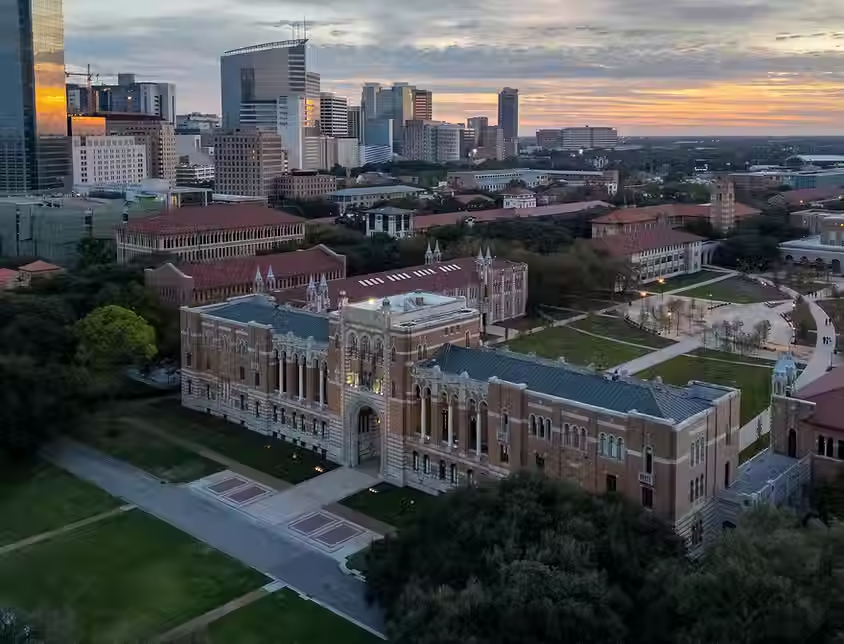
The Institution
Rice University at a Glance
Rice University is a leading private research university in Houston, Texas, with a global academic community of more than 8,500 undergraduate and graduate students, including over 2,000 international students representing more than 100 countries. The university also supports more than 900 faculty members and 3,000 staff members, with over 1,000 major campus events annually.
Known for its contributions to scientific research, nanotechnology, and international collaboration, Rice maintains partnerships with institutions around the world, including CERN. Its history includes hosting the 1990 G7 Economic Summit and President John F. Kennedy's landmark 1962 address at Rice Stadium.
Supporting an institution of this scale requires a reliable digital infrastructure that makes technology resources, support services, and essential information accessible to thousands of people across campus.
The challenge
Rice University's technology support ecosystem had become fragmented across competing subdomains, including kb.rice.edu, tutorial.rice.edu, and numerous disconnected departmental forms. The existing website relied on an unintuitive hamburger-menu navigation system that buried essential resources, including help articles, tutorials, and customer service contact forms several layers deep. With critical information difficult to locate and inconsistent navigation across platforms, more than 10,000 students, faculty, and staff were regularly resorting to Google to find internal university resources.
Analytics revealed bounce and exit rates exceeding 87% across key pages and navigation pathways. At the same time, new management initiated an institutional rebrand in late 2025 and early 2026, transitioning the Office of Information Technology (OIT) into Technology Solutions & Services (TS&S), with a new website domain at tss.rice.edu.
The project required more than a visual identity update. It called for a comprehensive restructuring of the digital experience, including accessibility improvements, information architecture, navigation, and the consolidation of fragmented support resources.
Rebranding, Accessibility & Addressing Years of Structural Debt
The new platform had to accommodate
-
Institutional rebranding from OIT to Technology Solutions & Services.
-
A new digital destination at tss.rice.edu.
-
Accessible, intuitive global navigation.
-
Centralized access to technical support and customer service.
-
Tutorials, knowledge base articles, and help desk resources.
-
Role-based navigation for students, faculty, staff, and visitors.
-
Task-oriented shortcuts for common technology needs.
-
A standardized directory of university technology services.
-
WCAG 2.2 AA accessibility improvements.
User Research, Analytics & Accessibility Audits
Working within the Simpleview CMS, I helped build out Comicpalooza’s digital presence beyond its original blog and Facebook group.
I organized website content around the needs of attendees, cosplayers, exhibitors, guests, and media, making essential event information easier to find and navigate.
Rather than relying exclusively on anecdotal feedback, I used accessibility research, third-party assessments, and quantitative user behavior tracking to identify the underlying problems.
LevelAccess Research & Accessibility Audit
Partnered with LevelAccess to conduct accessibility assessments and evaluate the existing user experience. Testing exposed significant WCAG 2.2 compliance issues, screen reader barriers, and broken focus states that created navigation obstacles for people relying on assistive technologies.
Google Analytics Behavior Tracking
Analyzed user behavior and drop-off metrics across important support pathways, including the /get-help experience. The data revealed that users were arriving with specific support needs but abandoning the experience when they couldn't locate the information they needed.
These findings helped establish the priorities for the redesign: simplify navigation, improve discoverability, remove unnecessary interaction barriers, and organize information around actual user needs.
Understanding Where the Existing Experience Was Failing

Project focus
Digital strategy · Website rebranding · UX/UI · Information architecture · Accessibility (WCAG 2.2 AA) · User research · Google Analytics · Content strategy · Navigation design · CMS management
Website Rebranding, UX/UI & Information Architecture
Technology Solutions & Services Website | 2025–2026
From OIT to TS&S: A New Digital Foundation
The transition from oit.rice.edu to tss.rice.edu represented an opportunity to rethink how the university communicated and delivered technology support.
Rather than simply moving existing content into a new branded website, I focused on reorganizing the experience around the people who depend on these resources every day.
The resulting platform brought together previously fragmented support destinations, creating a more unified experience for students, faculty, staff, and visitors.

Takeaway & Project Reflection
Project Growth
What This Project Demonstrates
This project demonstrates my ability to work across complex institutional environments, connecting user research, UX/UI, accessibility, information architecture, content strategy, and digital platform modernization. It also reflects my ability to collaborate across departments and technical teams, identify systemic usability problems, and translate organizational changes into practical improvements for large and diverse audiences.
Rebuilding the Technology Support Experience
Driven by the research findings, I led the platform overhaul to address years of accumulated structural debt while supporting the institutional transition from the Office of Information Technology to Technology Solutions & Services.
The redesign replaced the hidden, mobile-style hamburger menu with a more comprehensive, accessible navigation framework designed around user intent.
Key Contributions:
Centralized "Get Help" Experience
Established Get Help as the primary call to action within the global navigation, providing immediate access to tutorials, help desk portal forms, knowledge base articles, and direct support channels.
Role-Based Navigation: "I Am A..."
Created dedicated pathways organized around distinct university audiences:
-
Undergraduate Students
-
Graduate Students
-
Faculty & Staff
-
Visitors
Task-Driven Navigation: "I Need To..."
Introduced direct shortcuts to frequently requested tasks, including password resets, campus Wi-Fi onboarding, and software requests.
Categorized Technology Service Directory
Standardized technical offerings across 13 core service domains, including Data & Analytics, Research Computing, and Teaching & Learning, reducing duplication and making services easier to discover.
Accessibility & Navigation Improvements
Restructured navigation and content hierarchy to support a more accessible experience, addressing the barriers identified during the accessibility audit and working toward WCAG 2.2 AA compliance.
The Rice University Technology Solutions & Services project brought together institutional rebranding, UX/UI design, information architecture, accessibility research, analytics, and complex content restructuring.
By untangling years of fragmented subdomains and replacing hidden navigation with an intent-driven structure, I helped transform how more than 10,000 students, faculty, and staff access university technology resources.
The project reinforced that successful platform modernization requires more than a new visual identity. It requires understanding the systems behind an organization, identifying where users experience friction, and translating complex institutional structures into intuitive digital experiences.
Explore the transformation
-
Original platform: oit.rice.edu
-
Redesigned platform: tss.rice.edu
Information Architecture, Accessibility & User Experience & Designing Around Real Campus Needs
The redesigned experience was structured around the different ways people interact with university technology services.
Students looking for Wi-Fi access, faculty requesting software, staff needing technical assistance, and visitors navigating university resources all have different goals.
The new information architecture addressed those differences through clearly defined user pathways, task-oriented shortcuts, and a centralized service directory.By bringing essential resources closer to the surface, the platform reduced reliance on fragmented departmental pages and external search engines.
RICE UNIVERSITY · Technology department Site Rebrand
10,000+
13
87%+
CAMPUS USERS
Students, faculty, and staff served by the technology ecosystem.
CORE SERVICE DOMAINS
Standardized technology service categories.
LEGACY BOUNCE & EXIT RATES
Reported across key pages and navigation pathways before the overhaul.
From fragmented departmental resources and hidden support pathways to a unified, accessible technology services experience.